Cart
0
Dr. Liz Cruz
Is your doctor upset with you because you stopped your medicines on your own? Let's talk a little bit more about this on this next episode of Digest This.
Hello and welcome to Digest This. I'm Dr. Liz Cruz and I've got Tina Nunziato sitting right by my side if you're watching us. Hopefully you are. And so today we have a very special guest and we have a physician, another physician that's going to be our guest. But she's not only a physician, she's also a very good friend of ours and we love her, we love her very much. Dr. Melanie Lane.
Dr. Lane, thank you so much for being on the show with us today. We're so excited to have you!
Dr. Melanie Lane
Well, thank you for that powerful introduction. And I love you both too, very much.
Dr. Liz Cruz
Thank you, thank you. Yes, and so just a little bit about Dr. Lane, she is a board-certified family practitioner. However, she also went on to do a fellowship in geriatrics. And so, she is a geriatrician. And that's such an important thing. We need more doctors like her.
When I was doing primary care, I used to call my geriatric patients my little potato chips because I found them to be fragile and they would just come in looking at me with those big eyes and I loved them so much. And so, I know that she has a special place in her heart for them...
Let's talk about how this came about, this idea for today's podcast.
Tina Nunziato
So Dr. Lane and I frequent lunch together. try to, once a month, we try to get together and connect and be there for each other. And we use that time to vent to each other about what's going on in each other's lives. And one of the things that came up recently at one of our lunches was this topic that we're going to talk about today. And I told her, this would make such a great podcast.
Dr. Melanie Lane
Yes
Tina Nunziato
She was kind of nervous at first but I told her, you’re going to do great. You're going to get so addicted to the podcast that you're going to want to do so many of them with us because they're so much fun. Anyway, thank you for joining us and talking to us about some of the frustrations that you're having in practice right now and what's happening. I think it's a good topic for patients to hear how doctors feel when they're coming in and doing these things. So tell us a little bit more about your practice.
Dr. Melanie Lane
Thank you for having me.
Dr. Liz Cruz
How long you've been practicing, just kind of give us a little bit about you and then we'll jump into the topic itself.
Dr. Melanie Lane
Sure, I completed my residency in 2002 and I really found that I love working particularly with seniors. So people over the age of 65. I found this geriatrics fellowship out here in Arizona, because I wanted to learn more about the specifics of caring for elderly people. I really particularly love the most fragile, the 90 year olds and older, but 65 and up is definitely where my heart is. And one of the challenges that I have been experiencing the last five years, especially since COVID, and I agree with you, Dr. Cruz, about people's level of trust in their physicians and their willingness to follow proven care guidelines has really kind of gone off a cliff.
And the thing that we were talking about that I was so frustrated about was the fact that I diagnose my patients with conditions like diabetes or osteoporosis, thinning of the bones or kidney disease or high blood pressure. All of these things have very serious potential complications, including death, if they go untreated. And we have great medications to either treat, not necessarily cure, but to treat or slow these conditions down to really prolong life and improve quality of life. And nobody wants to take them anymore. 20 years ago, if I prescribed Fosamax for a lady with a hip fracture, there was no pushback. There was like, great, there's a medication to help my bones get stronger. I'm all for it.
Nowadays, I can't get anybody to start on a cholesterol lowering medication when we have decades of good solid scientific evidence to support their use to reduce risk of heart attack and stroke. I can't hardly get anybody to treat their bone density. Folks don't want to take first line medications for diabetes. And it's hard for me because I'm trying to do things to help them save their lives. And instead, I'm losing out to TikTok or their neighbor.
Dr. Liz Cruz
Mm-hmm.
Dr. Melanie Lane
And so that was my complaint. I just feel like nobody's really listening to me anymore. I liken it to imagining my patient is standing on a train track and the train is coming and I'm telling them, hey, let's get you off this train track because that train is going to hit you and it's going to be really bad. And the response I get is, well, I don't want to get off this train track because if I do, someone might bump into me with their bicycle.
It's that kind of thing. So, yeah.
Tina Nunziato
Yeah, that's very frustrating. Well, before you jump into your thoughts there, because we talked a little bit about this podcast before we started podcasting. I know Dr. Lane expressed what she wanted to talk about. And then you started talking about COVID. And I want you to kind of talk a little bit about what you said during that part. I think it's important for people to hear that in terms of what you've also been experiencing.
Dr. Liz Cruz
Sure. When we were talking, basically what I had said was that when my mom was sick during COVID, the ICU doctor, that was taking care of her was, I mean, I could just tell she was very worn out every time and she was great. She would call me every day, but you could just hear it in her voice. And I asked her, how's it going? She said, not only am I physically exhausted because we are working day and night. But the other thing on top of it is that never in my career have I encountered so much resistance from patients' families. I mean, a lot of these people were coming in and they were so sick. The ones she was taking care of were on ventilators, so she was mainly dealing with their families. She goes, and never have I encountered so much distrust and resistance.
Dr. Melanie Lane
Mm-hmm.
Dr. Liz Cruz
And she said, they question everything I'm telling them. And she did say, you know, it's understandable because we have just been hit with this COVID virus that nobody really understands. In one week, they're saying this is what we should be using. And the next week it changes. And so she goes, I get it, but we're giving and treating with the medicines that we know at this point are the best and people are just pushing back. And so as a result, in her opinion, there were some people that were dying because their families were resistant to some of the treatment that they had. Now, were they going to die anyways? I mean, who knows, right? Who knows? But, and I feel that since COVID, that whole thing with doubting, not fully trusting, resisting has worsened.
Dr. Melanie Lane
Mm-hmm.
Tina Nunziato
I believe and I agree with you, it's been there for a while, but I feel like it's really gotten worse through the years, you know, I feel like since COVID there's such distrust in the medical field in general. I mean, aside from just being angry, people just seem angrier since COVID.
Dr. Melanie Lane
Yes, they do.
Tina Nunziato
I just feel like you have to talk them into every little thing where you didn't have to do that before. You just said, look, you got to be on this. Okay, fine. Now we have to talk them into it or have an argument with them about it because they don't want to do what their doctor is telling them to do. And that could be very frustrating. What are the reasons that you get? I'm sure you're having many of these conversations with patients and they're not wanting to listen because now they're looking stuff up on Google or because like you mentioned, TikTok, social media, friends. I mean, is it just a combination of all of that?
Dr. Melanie Lane
Yes, to be clear, sometimes it's, especially with older patients, sometimes cost is an issue. That's a whole different problem. Medications that are desperately needed, but we can't get them in an affordable way to the people who need it most, like inhalers for COPD or blood thinners for people with AFib.
A lot of it also, if they're just taking too many medications, they're like, I don't want one more pill. No, it's too much. So some of that is a different set of complications that factor into the medication list. But in terms of what frustrates me a lot is either just no, I won't take it. That's most of it. And if I try to probe further, well, I've read online that stuff's poison. That's going to give me dementia or I told my neighbor about it and she said, oh, that was terrible for her and her niece nearly died on that medication.
And so it was family or friends or misinformation. They go home and my least helpful friend is the package insert. You know, I've gotten to where I've started telling people, please don't read the package insert because you will have every side effect listed in the package insert. Yes, it's there for reference in the event that something happens to you while taking the medication, but you know who you really should be consulting is actually the doctor who prescribed the medication. You know, the package insert, you know, scares everybody. And what people often don't understand is, you know, these are side effects, most of them are, miniscule, you know, very, very infrequent, especially with my anxious patients, like, you know, they expect to have every single side effect listed and they're like, well, the side effects are terrible. I'm not going to take this medicine.
Tina Nunziato
And then what are they doing otherwise? Like are they even doing anything? Are they wanting to take supplements? What are they saying?
Dr. Melanie Lane
A little of both. A lot of it is like for cholesterol. Well, I'm just going to work on my diet. I'm going to take some red yeast rice or any number of different kinds of supplements that they find online, that they find on social media. There are some websites with docs that go against the grain. Basically, there are docs out there that'll tell you all vaccines cause cancer. They'll find an MD somewhere that says, nope, this is actually something chronic Lyme disease or something. They don't know how to discern who is a credible physician and who is someone who is an outlier who's probably trying to sell you something really expensive instead that's not proven.
Dr. Liz Cruz
Mm-hmm. Right.
Dr. Melanie Lane
Or just freak you out into not getting vaccines at all, conspiracy theory stuff. Which is not who Dr. Liz Cruz is. I'm just clarifying here.
Tina Nunziato
A lot of people come to us because we have a more natural approach as well, right? And so most of the time people come to us, they've already been worked up by a GI. But every once in a while we get those people who have not been worked up by a GI. And that is the first question I ask them. You know, they tell me I have these four symptoms and I'm like, OK, well, have you ever been worked up by a GI? We'll no I don't like going to doctors. I just want to do all the natural things and I straight up tell them, look, you know, I appreciate that, but if you have stomach cancer or colon cancer, taking a probiotic or a digestive enzyme isn't going to help you. Right.
So we've got to go get worked up. You have to make sure you don't have anything really bad going on. You’ve got major inflammation, there's a place for traditional medicine if you've been diagnosed with something. Once you've been worked up and everything comes back negative, maybe you don't want to be put on the PPI that, you know, the doctor's throwing at you long term. Okay, let's talk about your options, right? But you have got to go get worked up. You got to get diagnosed. If you have a diagnosis, you got to get treated, you know, things like that.
Dr. Melanie Lane
And I'm not opposed to a natural approach. I'm not opposed to someone not taking their statin. What I'm opposed to is you taking the medication and then not taking it and coming back six months later to say, yeah, no, I didn't want to take it. Well, how about let's have a little dialogue here. Let's talk about it. Let's talk about the pros and the cons.
Give me an opportunity to make sure you have the most credible, at least from a medical doctor's perspective, that you're making a really sound, informed decision. And if after all of the above has been reviewed, you still would rather do the red yeast rice, it's your body, you do you. I'm not opposed to that. I'm not telling you, you must do what I say. I'm not your warden or your mom, but to disregard your physician's recommendations without consulting them to say, hey, I have this question over here or what about this over here? It robs the patient of the opportunity to have a discussion where they might make a better decision.
Tina Nunziato
Yeah, agreed. I agree. And you're following these people, obviously, ongoing, right? So let's say the 65 year old that refuses to take whatever medicine you're telling them they need to be on, and then they're back again in your office in a year or two years and, they're still having issues, you're still telling them and they're saying no. I mean, what's been your experience with these individuals who are not taking the medicines? Do you find them getting sicker and sicker?
Dr. Melanie Lane
Well, in general, depending on what it is, yes, if they don't take anything, their diabetes usually gets worse or their kidney disease gets worse, their blood pressure gets worse. They may start having heart attacks or if they're, diabetes, maybe they start having bad nerve pain because their diabetes is worse.
I think I want to back up a little bit, what can be challenging about a lot of these things is that no one wants to treat it if they can't feel it. You can't feel osteoporosis until you break your hip. You can't feel your high blood pressure until you have a heart attack. Same thing with cholesterol. You can't feel your high cholesterol. Generally, unless it's severe, you can't feel your diabetes either. The sugar is high and unless it's severely elevated, you don't feel anything. So I think that's one of the other things I'm fighting against is I don't feel bad. Why should I take all these pills?
Dr. Liz Cruz
Mm-hmm.
Dr. Melanie Lane
But yes, over time, things usually tend to get worse. And I just, I try to just be patient. Do you want more information? Would you like to reconsider? I'm not the sort of doc that fires a patient because they don't take my recommendation. My hope is that over time, maybe I can build enough rapport and trust that they'll be willing at some point down the line, to try what I'm recommending. But it's just hard though. Some of these patients, they just get sicker and I often kind of wonder why they come to me. But I don't say it that way.
Dr. Liz Cruz
A few months ago actually I had a patient who I had found an ulcer on when I did their procedure, their endoscopy, and then I put them on medicine to treat them. I mean, look, I love a more holistic, natural approach if I can, but I have to use medicines in my practice also. And so, you know, that's what those medicines are there for.
I started them on it, they showed up, I'm like, have you been taking this medicine? They're like, no, and the reasoning was because one of their family members said, don't you know that that medicine can affect your kidneys and cause some Alzheimer's, some dementia. And so they stopped the medicine and only took it for a few days. And I was like, there's no sense in me doing this endoscopy on you because we were repeating it to check for healing.
There's no sense in me doing it because you haven't taken the treatment and you know, I'm like, it's probably not going to be healed. So those are situations where it is frustrating because of multiple reasons. They haven't taken their medicine. So they probably still have that ulcer brewing there and they're still not feeling well, and along with all the other things that we just, you know, they just scheduled a procedure and took a whole day off of whatever work and had someone come to drive them like there's all these aspects to it. I'm just thinking if only you had taken your medicine.
Tina Nunziato
So did they agree to take it going forward or not?
Dr. Liz Cruz
Yeah, they agreed and we ended up rescoping them again to check for the healing but even like in patients with ulcerative colitis and Crohn's disease those are the ones where typically we have to have them on prescribed medication. Those are the patients where I've encountered the most of, well, I stopped it, I started feeling better and I stopped it or somebody told me I shouldn't be taking it and it's like, I wish you had called. I just wish you had called and let me know so that I could guide you and counsel you as to why you should continue taking it and the fact that you were getting better is great, but this is a disease that actually flares.
Dr. Melanie Lane
Because the medicine was working, right?
Dr. Liz Cruz
Exactly, the medicine is working. So yeah, it is frustrating and yes, for over a decade, more than a decade, you've had people coming in that just look stuff up and they're like, this is what I found. They bring in their packet of all the pages printed on how they've self-diagnosed.
But we just keep doing our best and trying to educate as much as we can. So have you found, so let's say somebody then has a heart attack and now you're telling them, look, you really need to be on this medicine. Are they doing it or are they still not doing it?
Dr. Melanie Lane
Yeah. A lot of the times a heart attack will get their attention actually. And their cardiologist will get their attention. Having your sternum cracked and having bypass surgery usually resonates with people. So they generally are more likely to take the medications once something really bad happens. But keep in mind, you could have died. You might not have survived. What is really striking to me is how many patients have hip fractures.
Those are devastating injuries. They have to have surgery. A lot of these little elderly ladies, they end up in rehab for six weeks. You know, that's where they get pneumonia and blood clots and other problems. And then they go home and they still don't want to take medication. And I’m like, okay, well you have another hip. We don't want that one to fracture, right?
Dr. Liz Cruz
Wow, yeah.
Dr. Melanie Lane
With the metformin, they don't care how bad their sugar gets generally. There are some folks where there's a disconnect and there's some people I just can't help. I think maybe people don't know how much education and training we have. I don't know if maybe that's part of it. You know, I've asked my patients before about that. If a patient says, well, my neighbor took that and said I shouldn't take the medication. And I'm like, well, is your neighbor an identical twin? Does your neighbor have the exact same medical problems you have, the exact same kidney function, the exact same blood sugar? Is your neighbor well-versed in the other medications you take? Has your neighbor considered the pros and cons of whether or not you should take this medication with you?
So yeah, the challenge as a physician is to not let the ego take over. And so I've got to figure out a way to educate people on how to find good scientific evidence. So, for example, if your Dr. Liz Cruz's patient, the only other person qualified to weigh in on your medication is probably another gastroenterologist, but you still need to talk with Dr. Cruz before you change your medication.
Tina Nunziato
That's what I was going to ask you. What do you typically tell them? Is that what you're telling patients then? When you say you want to help educate them on where to get the right information, what are you typically telling them?
Dr. Melanie Lane
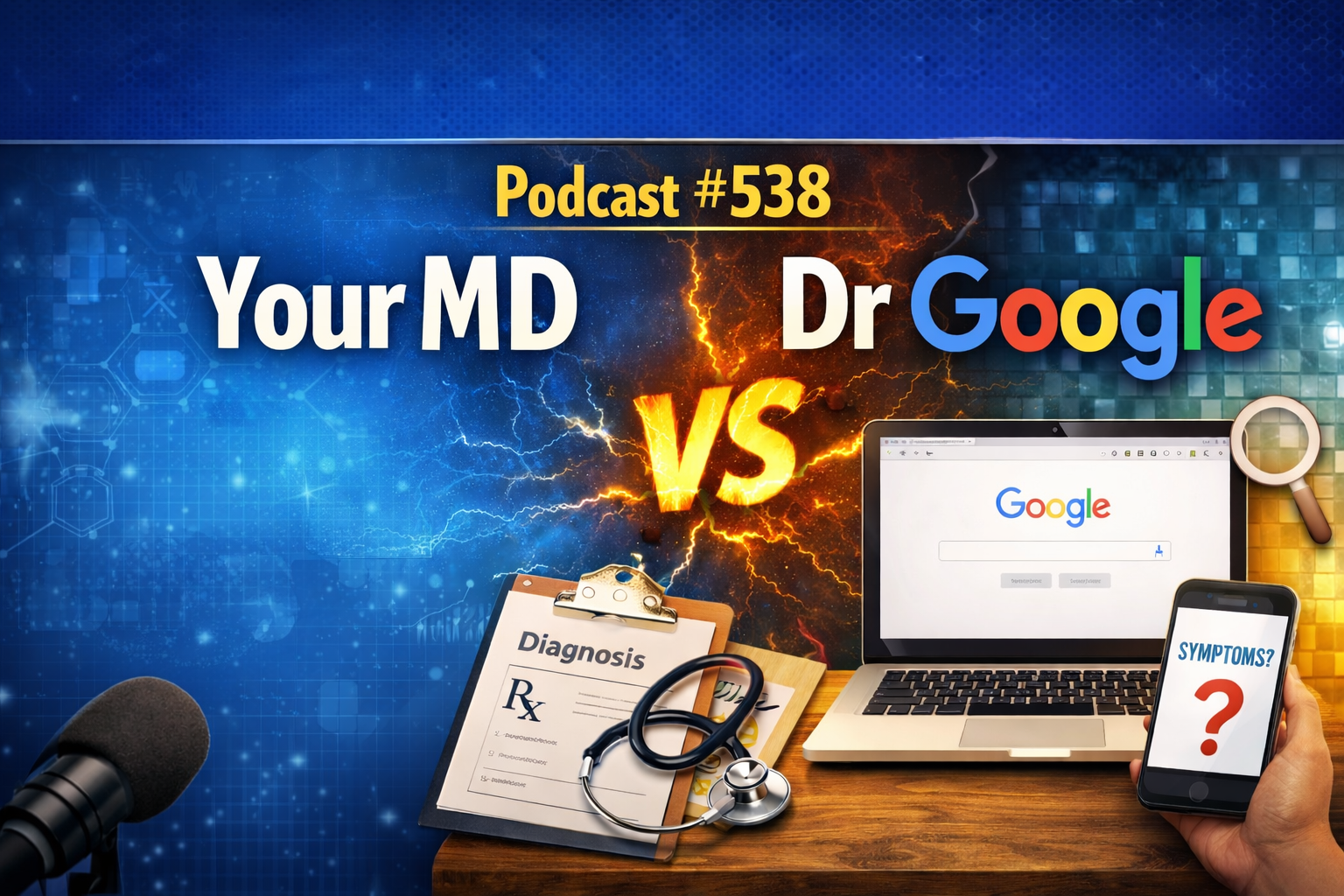
So I've started giving them some guidelines for finding information on the internet. Of course, Google is not a doctor. Google doesn't know you, your physiology, the other medications you take, your family history. Google doesn't know any of that. And it is generally going to spit out at the top, whoever has paid the most money for search engine optimization. It’s going to put whoever is willing to spend the most money right at the top, and that person is probably trying to sell you something to treat your condition that doesn't have any scientific data behind it. You don't just blindly search Google.
You'll want to search organizations that the website either ends in .gov or .edu. So is the information coming from a medical school? Is it coming from the CDC? Is it coming from the National Institutes of Health? Mayo Clinic generally is a very good resource. Mayo.org, they have all kinds of information for patients. I tell people to lean towards Mayo, Cleveland Clinic. websites that have their information steeped in medical science and good evidence, not just somebody who's out on the side trying to sell you something.
I tell people to steer away from websites that have really outlandish names like Stop the Thyroid Madness. That is probably not a medically sound source of information or COVID vaccines give you turbo cancer. Okay, that's not doctor speak. And so that's something you want to avoid. And if there's lots of advertising, if they go there to look for medical information and there's lots of advertising and trying to sell you lots of products, telling you that your medications are going to give you dementia, but if you take this supplement over here, you're going to be great.
It's clinically proven, but then, if you want to look and see, do they have references to like real scientific studies? Are those studies randomized placebo control double-blinded trials? It takes a long time for doctors to learn how to weed through scientific evidence to figure out what's good and what isn't. And the average patient hasn't had a class in medical statistics.
Dr. Liz Cruz
Nope.
Dr. Melanie Lane
Those kinds of things are what I would suggest if they're going to look for information online. And then I would always say, and write down your questions and come back to your doctor and ask, why did you choose this over this when I was looking at mayo.org? They suggested this over here.
Tina Nunziato
Yeah, I think that's great. Thank you for sharing those. That's awesome. Well, hopefully everyone learned a little something on this podcast and we can share it with people so that they maybe give their doctors the benefit of the doubt a little bit more than we did. Dr. Lane. Thank you so much for all that.
Dr. Melanie Lane
Right, right. We might know a thing or two.
Well, thank you for having me.
Dr. Liz Cruz
Yeah, absolutely. And we're going to get you back as a guest because I know that you've got some other exciting things you could talk about. Thank you so much for being with us today and for all the wonderful information. If you want to connect with us, please find us on our website, drlizcruz.com. There's a magenta-colored button on the home page you can click it and schedule a free 30 minute wellness consult. If you haven't rated us, please rate us and please give us a five. It'll help other people just like you to find us quickly. If you haven't subscribed, please subscribe so that you never miss an episode. Thank you so much for joining us and we will catch you on the next podcast.