Cart
0
Dr. Liz Cruz
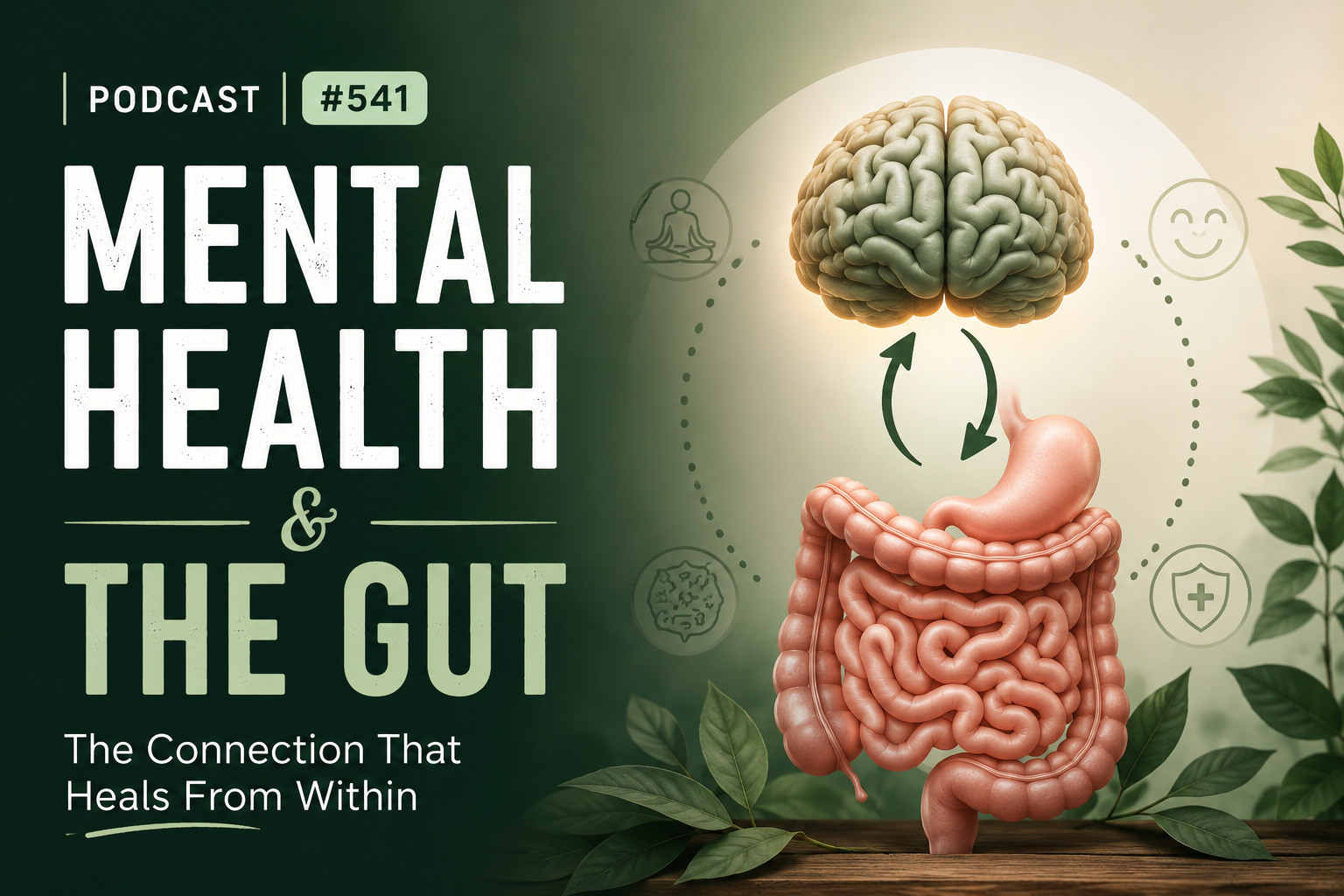
Have you ever heard about the brain-gut connection? Well, stay tuned for this next episode of Digest This.
Hello and welcome to Digest This. I'm Dr. Liz Cruz and I've got Tina Nunziato sitting right here by my side. Thank you so much for joining us. If you are one of our regular listeners, we love you, we thank you for being on this journey with us. And if you're one of our first time listeners, welcome and please check out our library. We have over 500 episodes in there as we've been podcasting for over 10 years. A lot of great information and it's always pertinent, always.
Let's jump right in. Today we have a very special guest, Dr. Brian Lamoureux. Dr. Lamoureux is a naturopathic physician who is in San Diego, California. And he has a very special interest. His focus and expertise is in mental health, which I think is fascinating. The first time I spoke with him, I was very excited because there is a connection between our gut and the brain. And I think there's a lot of confusion about it. Some people don't even know that there is a connection. And I just thought it would be wonderful to have Dr. Lamoureux on our show so that he could enlighten us and share some of his wisdom and pearls. So Dr. Lamoureux, welcome to our show. Thank you so much for being here with us.
Dr. Brian Lamoureux
Yeah, thanks for having me. I'm super excited to be chatting with you guys.
Tina Nunziato
This is awesome. So how did you as a naturopathic doctor, how did you get into the mental health niche? How did that come up for you?
Dr. Brian Lamoureux
Yeah, that was always something that I was interested in. And I think during my clinical education, I felt more and more interested in it. And I think we all are looking at the world around us and seeing that everybody is needing support with mental health for a variety of reasons. And like with a lot of health conditions, think people have been seeing and hearing that the rates of mental health diagnoses have seemed to be increasing every year.
Dr. Liz Cruz
Sure.
Dr. Brian Lamoureux
And so I wanted to play a role in giving people support and yeah, yeah, it's like if you don't feel like you can exist in your own mind and operate in the world, can throw other things off too. So I think the short answer to your question is I'm passionate about it. I got excited and wanted to work with patients in that.
Dr. Liz Cruz
And are those the main patients you work with, like just patients with mental health, or do you also handle other issues as well with patients from a more natural standpoint?
Dr. Brian Lamoureux
Yeah, so it was kind of a funny thing. I wanted to become an expert in all things, like naturopathic medicine approaches to mental health. And I started learning that if I was going to do that, I had to have knowledge about a whole bunch of different things. So I needed to learn about hormones and women's health and gut health. There were all these sorts of different tangents that are connected to mental health.
And I think that's one of the reasons why it can be such a struggle for many people. So many different things go into mental health.
Dr. Liz Cruz
Absolutely. true. And since mental health is your focus, do you though by chance at times see patients who are coming in who may have digestive issues, you know, where there's that along the side of them?
Dr. Brian Lamoureux
All the time. All the time.
Dr. Liz Cruz
Okay. Okay, cool. So I'm curious, like, how do you manage them? How do you approach them? And, you know, what do you do? What do you recommend?
Dr. Brian Lamoureux
Yeah, know, so kind of doing a bird's eye view, right? When we're thinking of the gut and the gut health and how that connects to the brain and mental health. The very first thing, it was like, what's our gut trying to do first and foremost? Absorb nutrients from what we're eating. So we need our digestion to be functioning well so that we can break down and digest and then absorb nutrients from our food to fuel our bodies in positive ways so that we can function. And it's quite easy for that process to get disrupted, as you know so well yourself. And when that happens, we start to see that we're not getting the nutrients that we need. Nutrient levels can drop and so many nutrients are critical for mental health. So we need to be digesting and absorbing our minerals, like, iron or zinc or magnesium. We need to be absorbing our omega-3 fatty acids. We do take in vitamin D through our diet in addition to making it from sunlight. And then of course B vitamins, like all of these things play such a huge role in our mental health. And so, yeah, we want to make sure that we're eating a diet that incorporates these things, but then we need to make sure that we're digesting it and breaking it down. And it's surprising number of people, you know, it come in and they're anemic, their B12 is low, you know, they're like, hey, like, what's, what's going on here? And they're not digesting well. And so that's kind of the, give the very first foundational thing, you know, we want to be asking.
And then that takes us to so many other steps, for example, not just absorbing the nutrients we need, but getting rid of waste products. And so if we are not able to do that, if we're having like these buildups of waste products, then we might not be feeling so good from that either. So that's kind of another component that can come into play if someone's constipated, for example, you can have a buildup of all sorts of things. If your stool is sitting in your intestines and rather than getting excreted, there's an opportunity for the walls of your intestine to reabsorb some of the things you're actually trying to get rid of. And so that's not good. And that comes into play with a lot of things like, for example, estrogen, like the hormone estrogen, we can get like quite a buildup in women with constipation, for example, and then that can do all sorts of unpleasant things for our mood. you know, just as far as the basis of like our gastrointestinal tract, they take in nutrients, get rid of waste products right away, we're seeing so many connections between that and how we feel.
Dr. Liz Cruz
You're speaking our language by the way. We're very excited. This is very exciting. You know, so that's a very, I mean it's complex, right? Because as a gastroenterologist, know, and Tina's a certified holistic nutritionist and you know, and this is, I mean that's what we were doing in our practice was addressing the GI issues, doing the traditional GI workup and then bringing in the more holistic approach.
Dr. Brian Lamoureux
Yes.
Dr. Liz Cruz
You know, that in itself is very complex. Just trying to, you know, trying to explain and educate our patients and our clients so that they understand, you know, for you, you're focused on mental health. And so then, do you start out with, let's focus on your digestion first and then we'll focus on, you know, if you're feeling better, like that'll help me a little bit more. Or do you have like somebody else that you work with that's also helping you? Because that's a lot of different things to address.
Dr. Brian Lamoureux
Yeah, yeah, kind of turned into a jack of all trades. So I thought when I was a student and when I was getting into all of this stuff, I thought I was going to be like, okay, I'm going to focus on the nervous system and how to treat that, that one part of our being. Because that was how I thought of things. Okay, a brain, a nervous system, that's kind of the core thing. And then I just began to understand the holistic aspect more as I went along because it's not quite like that. It's sort of like people may not feel well and then they sort of pick the thing that's bothering them most and then they go to someone to work on that. But in reality, like they may have all these other things that are affecting them. So I think the answer to your question is, know, during the intake, I really go into a lot of different directions to explore nutrition, gut health, hormones.
Dr. Liz Cruz
Mm-hmm.
Dr. Brian Lamoureux
You know, like this inflammation, like the immune system, like all of these different things. And, you know, of course, like, there's also the whole psychological side of things, which, you know, we won't get into, but that's, you know, quite relevant too. And so, yeah, basically for every single person who comes in, for example, like I'm experiencing these mental health symptoms. For every person, I want to know what's going on with their gut and, how can we go about addressing that? And so I start addressing that with people. Then sometimes it turns out that the person that came to see me really needs to be working with a gastroenterologist instead, for example. It's like they come in, they're like, hey, I've just been experiencing depression. then maybe it turns out that they had Crohn's disease or something, but may not have even known it yet. So sometimes I catch things in patients where I'm like, okay, you know, we need some extra help.
Tina Nunziato
Yeah, that's actually a good question. We know a lot of people who go to naturopathic doctors, it's like something they really appreciate is having the naturopathic option versus the traditional medicine. What percentage of the patients coming to you would you say have never been to see a GI before because they're more focused on the natural side and they don't want to do traditional medicine?
Dr. Brian Lamoureux
Yeah, think not too many, ultimately. I think it is nice though that when it comes to something like that where I'm like, if I'm the one saying like, hey, you need this drug or you need the surgery, like they're not expecting that from me. And so sometimes they take it more seriously when I'm trying to get them the help they need. So, you know, I think most people are ultimately more familiar with, you know, the Western conventional kind of approach than they are with naturopathic medicine anyway. So I get a lot of people have had some kind of evaluation, but maybe they just didn't follow up or maybe they didn't necessarily realize like the importance of, you know, some of the things that maybe their PCP or their gastro told them. And so sometimes me reiterating it kind of can help make things click when that's, you know, what's going to help the most.
Tina Nunziato
Yeah, that's awesome. Yeah, there is a place for traditional medicine, depending on what the person was diagnosed with, but trying to educate them. That's the part is trying to say, look, it's okay to be on this medicine for this purpose, but then we can work on this other stuff, you know, from a more natural standpoint.
Dr. Liz Cruz
Yeah. That's awesome. You know, so let's, I'm just curious, like from in your field as a naturopathic physician. What do you use typically for treating patients who have depression? I know you focus on their gut and try to address those issues, get them nutrients, whatever they need, enzymes, probiotics, greens, whatever it is that they need. But what if they're still coming back and they're feeling depressed? At that point, what do you have in your armamentarium of treatments? I'm just curious what you use.
Dr. Brian Lamoureux
Yeah, so I'm always telling people, like naturopathic doctors, are not against things like drugs and surgery. We just try to kind of cover the bases first for like foundations and then things that people's bodies need. So for example, if someone comes in and it's like, okay, I'm experiencing depression. Well, one of the first things I want to know is, does this person have like a health condition that has not been diagnosed or that maybe got that missed. And so I see things all the time like anemia that the person just didn't know that they were anemic and they were feeling depressed and fatigued and well, that makes sense. And then other things too, like thyroid is a huge one. So many people come to me and we test their thyroid and it's like, have a thyroid disorder, a thyroid condition like Hashimoto's thyroiditis, for example. So, then we're really kind of trying to focus on that. And sometimes people come in and, know, yeah, there's stuff going on with their gut, you know. Like, you know, sometimes people have, you know, an infection of some kind that they picked up somewhere, you know and just has been hanging out there and we can talk more about that, but that can certainly affect mental health. Sometimes people have like long standing H. pylori infection or different parasites or things that they may picked up along the way. And so the first thing I'm trying to do is like, does this person have any like, know, like undiagnosed health conditions that need to be addressed?
Dr. Liz Cruz
Yeah.
Dr. Brian Lamoureux
That's kind of like the first part. Along the way, I'm thinking, how do we optimize this person's diet, their nutrition, their lifestyle? We're wanting to make sure people are sleeping well, moving their bodies, eating the things that are going to nourish them. And then, yeah, we want to get those things down first, right? And then we kind of start moving into supplements territory, where it's like, what nutrients or what herbs or what probiotics are going to have the best results with this person?
And there's so much we can accomplish using those things and kind of just giving a boost. know, people come in, they're having mental health symptoms and then they're deficient in B12, right? Or they're deficient in omega-3s or minerals or whatever it may be. And we're trying to kind of support that through their diet, through supplementation on top of the diet helps them to get better faster, kind of get back in the saddle. And the reality is...
At some point, for some people, there just is a time and place where it's like, hey, actually, the best thing to use right now in this situation is a medication. And there's nothing wrong with that. And that's totally OK to use. We want to use the tools that we have. And I'm in favor of using tools that work. It's just that we so often see when we have these foundations in place, people bounce back and feel so much better and recover so well.
And what I don't like to see is someone coming in who's like tells me like, you know, I went for an appointment because I was severely depressed and they just asked me a few questions and then started me an antidepressant and then we did some testing and it's like, okay, like I said, like, you actually have a pretty significant hypothyroidism that hadn't been caught so far. That's probably why you're depressed, you know? And so it's like, so for that person, if they started on an antidepressant, maybe it helped, you know, maybe for a while, but did that really get the thing addressed that's the most important in this case.
And then yeah, if we have everything address all the foundations, we're doing all the things that like I know how to do and we're just not moving the needle, then we have other tools that we can use and that will be helpful. And a lot of times if we get the foundations in place, the other tools like medications will work so much better. And I love this, there's so many peer reviewed studies looking at someone who's taking, for example, use of stimulant medication for ADHD or an antidepressant. And then they compare that to someone who's taking that plus like a certain supplement. like zinc or magnesium, for example. And so we can actually see that the groups taking the medication and the supplement adjunctively to that will often get better results from the medication therapy than those that just did the medication alone. And so, yeah.
Yeah, so hopefully that answered your question of how I come in thinking about all of this.
Dr. Liz Cruz
Yeah, think that it's so great that you're doing what you're doing and that you take that approach. Because it is true, I think that so many people get put on these medicines and the root cause is really never found. Now they end up and they come in and they have a list of 20 different medicines. A lot of times they don't even know what more than half of them are for you know? And so it's, like, I definitely love that approach. I think it's fascinating how the, what's going on in your gut. And maybe you can just comment on this, you know, like what's going on in your gut, you know, the microbiome, the bacteria, the hormonal, you know, everything having to do with hormones.
How the importance of, and you have already mentioned this, I just think it's so important that I don't mind if you mention it again, getting the nutrients and the bacteria, because it's true. We're exposed to so much that throws that balance off. Even being stressed, getting a call of something horrible or taking a little NSAID that you buy over the counter and people just buy them and take them like candy. So all of that. So if you could just talk to that one more time because I think it seems so simplistic, but it's something that I feel like a lot of people don't grasp and it's so important, so important.
Dr. Brian Lamoureux
Yeah, man, so much I want to share. yeah, let me just go on a little bit of a tirade here. So for everyone listening, so you have this nerve that starts in your brain and stretches down through your chest, your abdomen, through all your organs. It's called the vagus nerve. And the branches of that nerve go all over the place, like throughout your gut and so that nerve is a huge part of how your body finds out, hey, like what is going on in each of these places? So yes, it is connected to your heart, but it's connected to your intestines, your stomach, and then those places communicate back to your brain. They talk to your brain. So your brain, yes, it does talk to your gut, but your gut will kind of performs like a recon for your brain and it signals back and it says, hey, here's what's going on. And it tells, it kind of tells your brain like, is there inflammation? Is there like something happening with your immune system? You know, all these different things that can be going on. And so there's this back and forth conversation that's always happening with our gut. And so that's like a hugely important piece. And then you kind of mentioned the piece of stress. So when we have like psychological or emotional stressors, a lot of people have heard of a fight or flight kind of state. And so the vagus nerve is what we call like the rest and digest state. And so we want there to be activity with the vagus nerve so that we can be resting and adjusting because that's ultimately going to help with these things I'm talking about, like absorbing our nutrients and helping our mental health.
For a lot of people, get locked in this sort of fight or flight state, and that shuts down the vagus nerve, and it shuts down its ability to digest food, to effectively perform its job, because all the resources are kind of going to other nerves that are attached to our muscles, for example. So if we need to, again, run or fight, we can do that. And so we've got this whole neurological balance going on with our gut, and then with this communicating back to our brain.
I think we're all really familiar with the flu or we get COVID, our mood drops. Our mental health, when we're sick, it's not that great. We can feel really low or depressed or really crappy. And why is that? It's because we're having this immune response going on. And so that can happen in our gut. So let's say, like I said, if you have a parasite or an overgrowth of something that doesn't belong in your gut, and it's causing inflammation and it's kind of messing with your immune system, then some of those, the signaling from the gut into vagus nerve back to our brain will kind of make us feel like we're sick, like in a kind of similar way, it's kind of similar situation that inflammation and those signaling molecules of inflammation from the immune system.
They can shut down our mood. so then we're like, hey, if that's the case, how do we get rid of what we don't want in the gut? Because we have so many microbes in our gut, and they're doing all kinds of things. So they're helping digest our food, and they're also making neurotransmitters. So one thing that often gets talked about is the majority of the serotonin, which is a neurotransmitter that gets lot of attention, is actually made in our gut and heavily associated with all these microbes. so, yeah, so there's all this cool, fascinating stuff that's going on and we just, want to make sure that if there's something that's not supposed to be in our gut that's causing inflammation and we needed to kind of try to get rid of it, if there is inflammation, we want to try to calm that down. And again, like, how do we do that? Managing stress, getting enough sleep, eating a good diet, that will help us.
Tina Nunziato
It's so great though that that was beautiful. Thank you. Thank you so much for saying that. Dr. Lamoureux, do you work with kids?
Dr. Brian Lamoureux
So I, a little bit, yes. I would say, like with the younger kids, I tend to kind of try to connect them more to pediatricians and that kind of thing. And there's actually some naturopathic doctors out there who've also been trained as midwives, which I think is so cool. And sometimes I will kind of defer to them. But I'd say like somewhere around like maybe like six years old and like older, I kind of start to work with them because then like the psychological components are kind of more developed.
And so, yeah, know, kids and teenagers are really vulnerable to a lot of these things that I'm talking about, just like, I mean, just like everybody, right? But, yes.
Tina Nunziato
There's a lot on our young kids these days, what they're being exposed to for sure. And all of your patients that you work with, they have to be in the state of California?
Dr. Brian Lamoureux
Some exceptions to that I have on my website So it you know, the interesting thing is naturopathic doctors are recognized in like a little over half the United States and so it's kind of an interesting, we can do sometimes like wellness coaching kinds of things in like in certain areas. But when it comes to some other things that I have, like for example, if I'm going to like prescribe thyroid medication because we discovered that someone has hypothyroidism, that would be something that I would only be able to do in California. I can sometimes coach people on things that will be helpful for supplements in certain states. So yeah.
Dr. Liz Cruz
Yeah, that's awesome. Thank you so much for joining it has been awesome. I have really enjoyed talking with you.
Dr. Brian Lamoureux
Yeah, likewise. Thanks for having me on. Thanks for letting me just go and share all the stuff that I'm super excited about. I love that you guys are excited about it too.
Dr. Liz Cruz
Your passion comes through, so thank you. It's really great to connect and we really appreciate it. Do you have any other questions? Is there anything else you want to share?
Dr. Brian Lamoureux
I think we covered a lot of what I wanted to say about gut-brain connections and hopefully that was thought provoking for some of the listeners and yeah.
Dr. Liz Cruz
Yeah, absolutely. And if you have not connected with us, please connect. You can find us on our website, drlizcruz.com. Schedule a free 30-minute wellness consult. Sign up for our newsletter. And if you haven't rated us, please rate us and give us a five. It'll help other people just like you to find us quickly and to be able to enjoy amazing episodes like the one we just had right now with Dr. Lamoureux. And if you haven't subscribed, please subscribe so that you never miss an episode. Thank you so much for joining us, Dr. Lamoureux. Thank you so much. It was wonderful having you on the show. Thank you.